Introduction
I used to have a lot of anxiety about failing OCS for various reasons. You always hear horror stories of how someone didn’t pass because of this reason or that. But does that really depict why people fail at Marine OCS? In this article, I’ll go over the reasons why people fail, what you can do to prepare, as well as what actually happens if for some reason you don’t pass.
So what happens if you fail Marine OCS?
If you fail OCS without committing an integrity violation, you’ll be allowed to come back a year later for the next class increment. Most OCS commands allow a candidate to reapply, so long as their character isn’t in question. Performance failures at OCS are rare because you will usually be given an opportunity to remediate before getting dropped.
Why people fail OCS (and how to not be that guy)
Candidates do something to violate integrity.
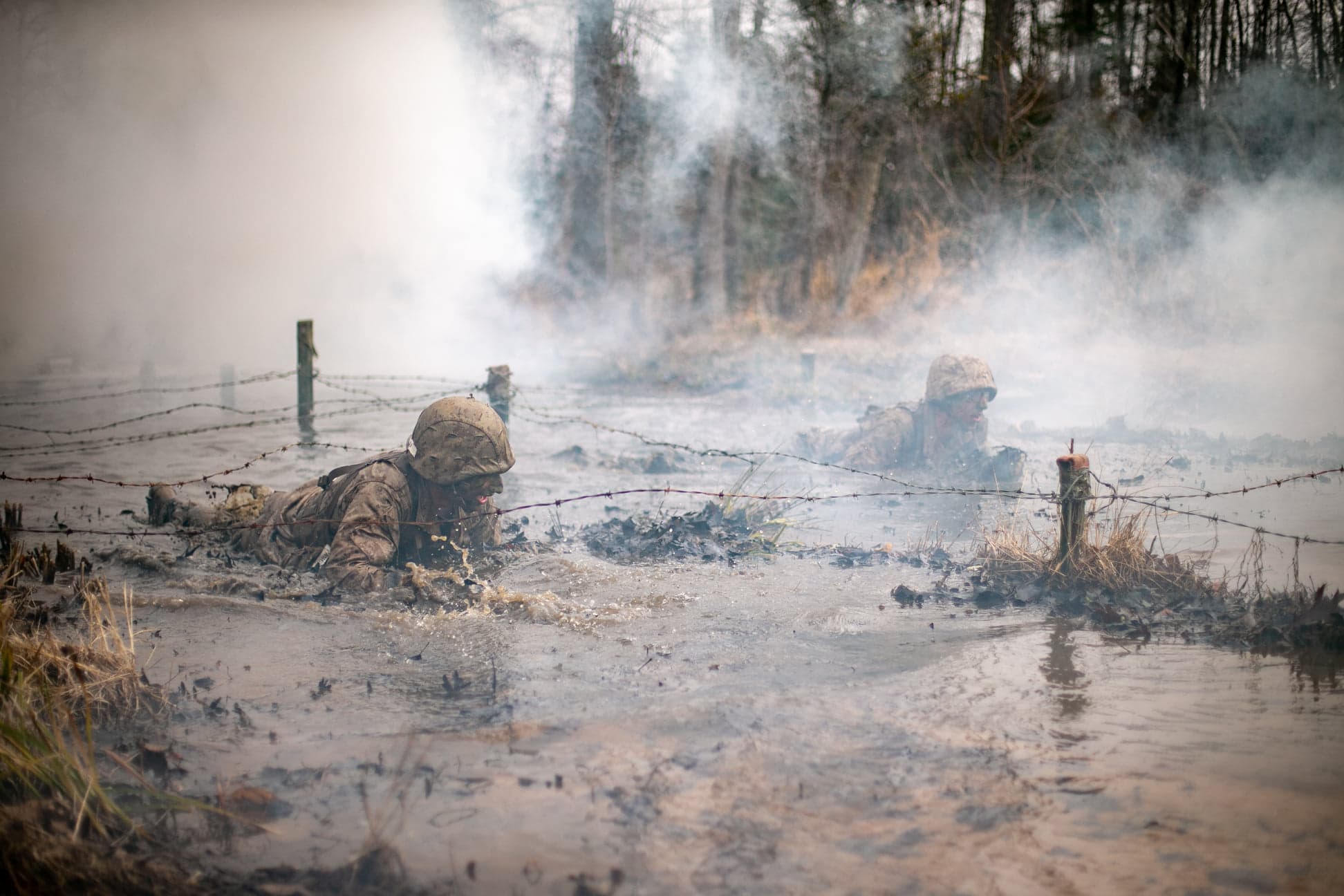
This is the biggest reason someone doesn’t make it through. They try to take extra food back from the chow hall during meal hours, lie about something they did or didn’t do when questioned by a drill instructor, or not turn in a disciplinary essay on time when told to do so.
At all costs, always tell the truth and hold your peers to the same standard. If you see someone cheating during land navigation or talking to another peer to get answers during a test, say something to an instructor immediately otherwise your honesty could also be brought into question. OCS demands the highest standards of character and conduct, they will accept no compromises and nothing less.
Candidates get injured and can’t finish an evolution
The most common injury at OCS are shin splints and people getting injured because they’re not used to running and being on their feet more hours than not. Some candidates don’t take their time during the Obstacle Course (O-Course) and they end up slipping on the rope or falling off a ledge that could have been easily prevented.
Some people graduated OCS on crutches, so it really depends on when you get injured. The command doesn’t want to drop people for injuries so they’ll usually allow for subtle changes to the period of instruction if medical deems a candidate injured or unable to complete a training event on that scheduled day. Swim with fins on to strengthen your ankles and do this for hours on end- this will prevent most injuries that people deal with at OCS.
Candidates get performance dropped
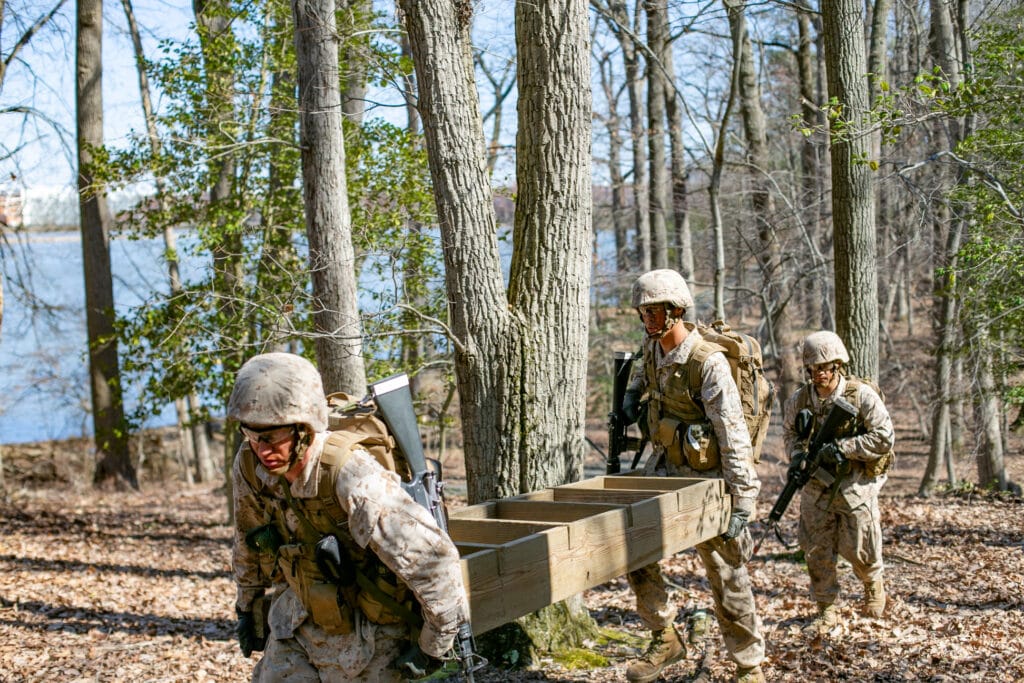
This is one of the more uncommon reasons someone won’t finish OCS. In my entire company of 263 candidates, there were only a couple that were dropped for performance reasons. Every event at OCS can be remediated if someone fails the meet the standard. Whether it’s an academic or fitness test or a field event like land navigation, sometimes it takes people more than one try to meet the standard. In most cases, candidates are able to eventually pass an event.
Candidates score lower than 80% on academics tests more than once
Academic tests cover a wide variety of topics. You have to get 80% or higher on all tests for it to be considered a pass. These tests are usually 50 question multiple choice tests graded by a scantron reader. The topics include Marine Corps history, land navigation concepts, leadership traits and principles, the operations order (writing and issuing tactical orders), and more.
You’ll be given a knowledge binder to study all these topics on during dedicated study hours at OCS (once a day). If you make efficient use of your time and study all the different OCS Quizlets before you show up, you’ll be in really good academic shape. Do not bring printed out quizlets to OCS or prior knowledge study aids.
Some people don’t pass land navigation after multiple attempts
Land navigation can sometimes give people a hard time because not everyone is good at counting their steps while looking at a compass bearing. The best way to make sure you aren’t someone who fails land nav is to really make use of the prep time they give you, talk to the tactics instructors if you need extra help and don’t think you have to struggle on your own.
You’ll have several ungraded land navigation classes that you can use to see if you’re doing everything right. By the time to final graded land navigation event came, I felt more than prepared (even for the night navigation portion). There’s also several online Youtube videos on how to conduct land navigation the military way.
Candidates quit on themselves
The age old advice is to always never give up, and this especially remains true while you’re at OCS. The biggest thing to understand is that there is no real way to prepare for the culture shock of OCS. The chaos from yelling drill instructors was still something I didn’t feel prepared for even having been in the NROTC program and taking simulated OCS classes.
Eventually, you will get used to the OCS lifestyle. You’ll find a lot of comfort in going to church services twice a week and talking to your peers during downtime if you have a bad day. For me, the hardest part of the whole experience was the first two weeks. After that, your body settles into a routine and time eventually flies by.
What is the pass rate at OCS?
I thought OCS was meant to be a high attrition school before I arrived. What I realized is that once you’re accepted to attend, they don’t try to drop as many people as possible- only the ones who don’t belong. In my company of 290, 263 graduated which means it was roughly an 80% pass rate. A lot of the drops in my company came because they didn’t pass the medical screening the first week they showed up.
Everyone in my platoon eventually passed. There was one guy who hurt his Achilles heel the first week during a workout. He got dropped but got rolled back and passed in the next increment and was my neighbor rack mate at TBS (The Basic School). Even people who passed out running the endurance course at OCS passed after they got a day of bed rest.
Can you reapply?
If you get injured at OCS or are unable to complete an evolution due to performance standards or something else, you’ll interview with the Colonel before getting dropped. This is after you’ve been interviewed by your Platoon Commander and received recommendation from the sergeant instructors.
If you’re a midshipman in the NROTC program, you’ll go back to OCS your senior year summer before you commission.
If you’re a civilian, you’ll either be allowed to come back to the 10 week winter course the next year or not allowed to based on your situation and the reason for being dropped. Most medical drops are allowed to come back as long as your character isn’t in question.
If you owe the government time in service because they paid for college or something of that nature, and don’t want to try again at OCS, you’ll have to work some other government job for a period of time if you owe them financial assets for student aid or some other amount.
How do I prepare for Marine OCS?
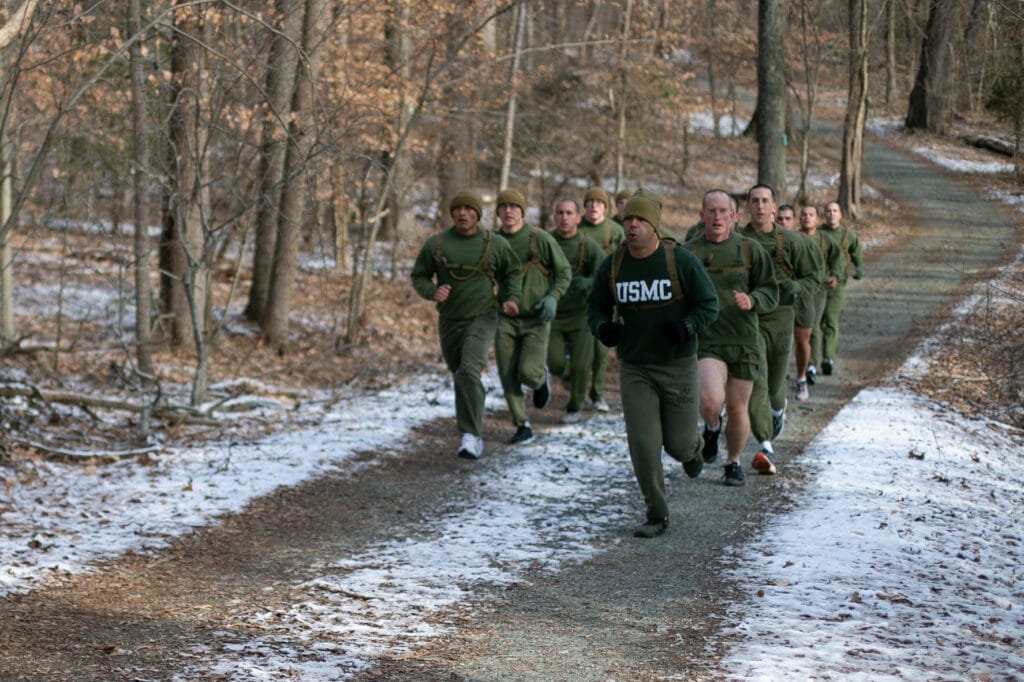
There’s a few really important things everyone needs to do to prepare for OCS. If you’ve done any previous research, you know how important running is. You spend a lot of time on your feet marching, jogging, and running around Brown Field. The best way to prepare for running is to get a really good pair of shoes, and run for 30 minutes every day with some interval work every other day. I have a whole running course on Youtube that you can use for free. It’s everything I’ve learned as a runner and the same exact stuff I used to prepare for OCS.
The best way to prepare mentally is the study the OCS flashcards on Quizlet. There’s a ton of different bits of knowledge you can pre-study before you arrive in Quantico. I went through a flashcard set a day for 30 days leading up and it really helped me learn everything I needed to know academic wise. If you have a hard time finding these quizlet articles, shoot me an email at theculture@gmail.com and I’ll do my best to respond.
To prepare your leadership, I recommend watching the video I made on Marine OCS:
In this video I break down all the leadership traits and principles you need to be aware of, and how to self-reflect on your ability to demonstrate them. It also should answer any additional questions you have about Officer Candidate School.
3 Common Myths About OCS
I put this section in head because there were a lot of false assumptions I had about OCS going into it. Being aware of them should help give you a better understanding of what it will consist of
Myth: You’re always getting yelled at, all the time
While this is a huge aspect of OCS, it’s not the only one. You’ll also receive an equal amount of classroom learning from tactics instructors and guest speakers where you get to listen and take notes just like a normal classroom setting. You’ll also have white spaces classes with your Platoon Commander, another officer, who will give you classes on leadership that comes from real world experience.
Towards the end of your graduation, you’ll actually be able to get to know your sergeant instructors really well and they will leave you with invaluable insight about what it means to be a good officer.
Myth: You fail all of OCS if you fail one event
As mentioned in this article, you’ll have the ability to remediate things you fail at. Everyone is expected to fail something at OCS or at least struggle with an event. They want to see how you push past adversity.
Myth: You’re always sleep and food deprived
If you manage your time well during the night hours after the lights go out, you’ll be able to get 7-8 hours of sleep. After the lights go out, you are free to move about your platoons barracks, shower, finish an essay you were assigned, and prep your gear. If you keep yourself focused and organized, you’ll be able to hit the rack at a much earlier hour than some of your peers.
You eat three to four times a day. You get a pre-workout snack, breakfast, lunch, and dinner. You have to eat as fast as you can, but you’ll be well fed. The chow hall food, in my opinion, was the best in the Marine Corps.
My Experience at Marine OCS
I took away a lot from my experience at OCS. I struggled the most with the culture shock and the numerous standards / rules they had but I think everyone does for the first couple weeks.
After I got used to routine and started hanging around the comedian candidates, my time at OCS became much less challenging. I actually performed better when I didn’t take myself so seriously and made everything a bigger deal than it was. You’ll find that most of what you feared or stressed about at OCS is only worse in your head than it actually is.
It definitely helped that I ran and swam every other day to get my cardio in good shape. If you can show up running a 19 minute three-mile, your cardio fitness won’t be a friction point by the time you show up.
Conclusion
Failing OCS is something you can easily mitigate now that you’re aware of why people fail. Good physical preparation and developing mental resiliency will make all the difference.
Thanks for reading! If you have any other questions or comments, feel free to use the email contact I provided earlier in this article to reach out and be sure to check back regularly for more articles.